Friday, October 13, 2023

A Day in the Life of an HR Professional


Introduction

Human Resources (HR) professionals play a pivotal role in any organization. They are the backbone of an efficient and harmonious workplace, responsible for recruiting, training, and supporting employees. This blog will provide an insider's perspective on what a typical day in the life of an HR professional looks like.


Morning Routine

Planning the Day:

Before the office gets buzzing, HR professionals outline their day. This includes scheduling interviews, meetings, and addressing any issues that require immediate attention.

Coffee and Emails: Most HR professionals start their day with a cup of coffee and a quick email check. They go through their inbox, responding to urgent matters and prioritizing tasks for the day.

Recruitment and Selection

a)Interviewing Candidates:

One of the core responsibilities of HR is recruiting new talent. This involves conducting interviews, reviewing resumes, and assessing candidates to find the right fit for the organization.

b)Candidate Evaluations:

After interviews, HR professionals evaluate candidates based on their skills, qualifications, and cultural fit. They often collaborate with department heads to ensure alignment with the company's goals.


Employee Relations

Employee Onboarding:

HR professionals are responsible for welcoming new employees to the organization. They help with paperwork, introduce them to company culture, and ensure they have the tools and resources needed to succeed.

Conflict Resolution:

Dealing with workplace conflicts and employee grievances is another part of the job. HR professionals work to mediate issues, finding fair solutions that benefit both parties.

HR Policies and Compliance:

Ensuring the company follows labor laws and regulations is essential. HR professionals work on maintaining and updating HR policies to comply with changing legal requirements.


Data Management:

Data is crucial for making informed decisions. HR professionals manage employee data, keeping records up-to-date and confidential.


Lunch and Meetings

Networking and Collaboration:

HR professionals often attend meetings with various departments, addressing specific HR-related matters or working on company-wide projects that require their expertise.

Training and Development:

HR professionals organize training sessions to improve employees' skills and knowledge, helping them grow within the organization.

Performance Reviews:

Conducting employee performance reviews and offering feedback is a critical aspect of HR work. This helps employees understand their strengths and areas for improvement.


Closing the Day

Wrapping Up:

The day concludes with final email checks, wrapping up outstanding tasks, and ensuring that everything is in order for the following day.

Conclusion

A day in the life of an HR professional is dynamic and filled with diverse tasks. They serve as the bridge between employees and the organization, playing a significant role in maintaining a healthy and productive work environment. While this blog provides a glimpse into their daily routines, it's important to remember that the life of an HR professional can be unpredictable, with new challenges and opportunities arising each day.

                                                                                                                                by-  Diksha Sahuji

                                                                                                                                HR Executive

                                                                                                                                 Techneutron


Tuesday, October 3, 2023

Building Strong Employee – Customer Relationship


Introduction: 

Building strong relationships between employees and customers is essential for business success. In this blog post, we will explore the key steps to achieving this goal and reaping the benefits of increased customer loyalty and satisfaction.


1.     The Importance of Employee Engagement:


Employee engagement is the foundation of strong employee-customer relationships. Engaged employees are more likely to go the extra mile to satisfy customers. To implement this:

•          Foster a positive workplace culture.

•          Provide opportunities for skill development and career growth.

•          Recognize and reward employee efforts.

  2.   Building Trust with Customers:


Trust is the cornerstone of any lasting relationship. To build trust with customers:

•          Deliver on promises consistently.

•          Be transparent and honest in all interactions.

•          Listen to customer feedback and act upon it promptly.

 3.     Communication is Key:


Effective communication is vital for understanding and meeting customer needs. To improve communication:

•          Train employees in active listening and clear communication.

•          Use various channels (e.g., social media, email, phone) to engage with customers.

•          Respond promptly to customer inquiries and concerns. 

4. Empowering Employees for a Customer-Centric Approach: 


A customer-centric approach means putting customers at the heart of your business. To implement this approach:

•          Encourage employees to take ownership of customer issues.

•          Empower them to make decisions that benefit the customer.

•          Provide the necessary tools and resources for exceptional customer service.

5. Going Above and Beyond: 


 To truly excel in building strong employee-customer relationships, consider going above and beyond what's expected. Here are some ways to achieve this:

•          Personalization: Tailor your interactions to individual customer preferences. Remember details about their previous interactions and use this information to provide a more personalized experience.

•          Anticipate Needs: Try to anticipate the needs of your customers. By understanding their habits and preferences, you can offer solutions before they even ask, showcasing your commitment to their satisfaction.

•          Resolve Issues Proactively: Instead of waiting for customer complaints, actively seek out potential issues and address them before they escalate. This proactive approach demonstrates your dedication to customer happiness.

•          Surprise and Delight: Occasionally, surprise your customers with unexpected gestures of appreciation. This could be in the form of special discounts, freebies, or personalized thank-you notes. These small acts can make a big difference in building lasting relationships.

6.     Measuring Success: 


 To ensure that your efforts in building strong employee-customer relationships are paying off, it's important to measure and track your progress. Here's how to do it effectively:

•          Customer Feedback: Continuously gather feedback from customers through surveys, reviews, and direct communication. Analyze this feedback to identify areas for improvement.

•          Net Promoter Score (NPS): Implement the NPS system to gauge customer loyalty and satisfaction. This standardized metric helps you assess how likely your customers are to recommend your business to others.

•          Employee Feedback: Don't forget to seek input from your employees. They are on the front lines of customer interactions and can provide valuable insights into customer sentiment and needs.

•          Key Performance Indicators (KPIs): Establish KPIs related to customer satisfaction and loyalty, such as customer retention rate and customer lifetime value. Regularly track these metrics to monitor


Conclusion: 

Building Strong Employee-Customer Relationships Pays Off


In a world where competition is fierce, businesses that prioritize strong employee-customer relationships have a significant advantage. These relationships lead to increased customer loyalty, higher satisfaction rates, and positive word-of-mouth referrals.

Remember, it all starts with employee engagement, trust-building, effective communication, and a customer-centric approach. By following the steps outlined in this blog post and measuring your progress, you can create a customer base that not only keeps coming back but also advocates for your brand.

Investing in these relationships is an investment in the long-term success and sustainability of your business. Start implementing these strategies today, and watch your business thrive on the foundation of strong employee-customer relationships.


Pavan patil

Business Development Intern

Techneutron


Thursday, September 28, 2023

Employee Engagement

Imagine going to work every day excited and happy, feeling like you're a part of something special. That's what employee engagement is all about. employees are the backbone of any successful organization, so keeping your workforce engaged and motivated is crucial. Employee engagement sessions have emerged as a powerful tool to achieve this goal. These sessions not only benefit individual employees but also have a positive impact on the organization as a whole.  In simple terms, it means that when people work for a company, they don't just do their job because they have to; they do it because they want to, and they love doing it. In this blog, we will explore some compelling examples of how employee engagement sessions can transform the workplace for the better.


What is Employee Engagement?
 

Employee engagement is like having a secret sauce that makes a workplace amazing. It's when employees care deeply about their jobs and the company they work for. Engaged employees are enthusiastic, motivated, and committed to doing their best every day. They're not just counting down the hours until they can leave work; they're excited to be there.

Why Does Employee Engagement Matter?

Now, you might be wondering, "Why should a company care if its employees are engaged or not?" Well, the answer is simple: engaged employees are like superheroes for a company. Here's why:

    1. Productivity Soars: Engaged employees work harder and smarter. They don't just do the bare minimum; they go above and beyond to make sure their work is top-notch.
    2. Happiness Rules: Engaged employees are happy employees. When people are happy at work, they're more likely to stay in their jobs, reducing the cost of hiring and training new people.
    3. Innovation Thrives: Engaged employees are full of great ideas. They're not afraid to share their thoughts and find new ways to solve problems, which can lead to innovation and growth for the company.
    4. Customers Smile: When employees are engaged, they treat customers better. Happy employees provide better customer service, which makes customers happy too.
    5. Less Drama: Engaged employees are less likely to cause trouble or complain. They're focused on their work and helping the company succeed.


How Can Companies Boost Employee Engagement?

Creating an engaged workforce doesn't happen by magic; it takes effort. Here are some things companies can do:

    1. Listen and Learn: Companies should listen to what their employees have to say. They can ask for feedback and then actually use it to make things better.
    2. Recognition and Rewards: It's important to appreciate and celebrate employees' hard work. A simple "thank you" or a small reward can go a long way in making employees feel valued.
    3. Clear Communication: Companies should be clear about their goals and share them with employees. When everyone knows where the company is headed, it's easier to work together to get there.
    4. Training and Growth: Giving employees opportunities to learn new things and grow in their careers shows that the company cares about their future.
    5. Work-Life Balance: Companies should help employees balance their work and personal lives. Nobody wants to be stressed out all the time, so offering flexibility and time off is important.
Conclusion 

 Employee engagement sessions are not just a trendy HR initiative; they are a strategic investment that benefits both employees and organizations. From increased job satisfaction and productivity to improved retention rates and innovation, the positive impacts of these sessions are undeniable. When employees are engaged, they become valuable assets that drive the organization's success. 

Therefore, organizations should prioritize creating and maintaining an engaging workplace through regular employee engagement sessions.

  
--Anamika

Human Resource Department

Techneutron


Monday, September 25, 2023

Redux_Middleware

In this Blog we will represent the Middleware of Redux which are as follows:

 Redux.js Saga and Redux.js Thunk.

First, we will see the difference between Both Middleware as mentioned.

Redux Saga vs. Redux.js Thunk: Decoding the Mysteries of Redux Middleware Modern React applications must now include Redux since it makes state management simpler. What transpires, though, when our program must deal with asynchronous operations? An effective technique for handling side effects is Redux middleware. We'll examine Redux.js Saga and Redux.js Thunk, two well-liked Redux.js middleware libraries, in this article.

Middleware Redux

Let's first define Redux middleware and examine Redux Saga and Redux Thunk before moving on.The Redux store's capabilities can be increased by using Redux middleware. It prevents actions from reaching the reducers and enables asynchronous operations, logging, routing, and other functions. Acting as a link between action dispatching and state updating is middleware.

Redux Thunk

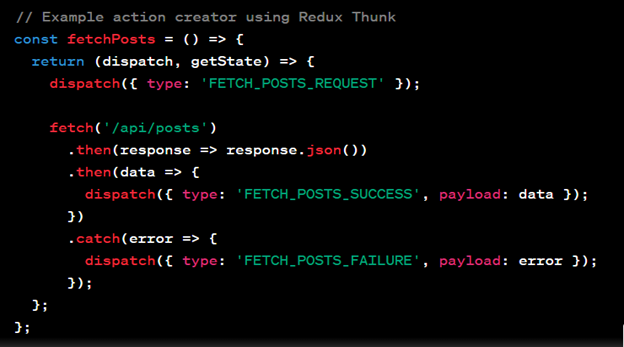
One of the most popular middleware libraries for managing asynchronous actions in Redux.js is Redux Thunk. It integrates seamlessly with the Redux ecosystem and is easy to use.Action creators can now return functions rather than simple action objects thanks to Redux Thunk. These routines can dispatch numerous actions and carry out async operations because they take the dispatch and get State functions as arguments,


Redux Saga

On the other side, Redux Saga is a middleware library that is based on ES6 generator functions. Complex asynchronous flows are easier to manage since they give side effects a more formal and declarative approach to handling.

Sagas are described as generator functions that execute logic in response to predetermined actions. They are excellent at handling complex control flows and consecutive requests, among other advanced use cases.


Use Redux.js Thunk or Redux.js Saga as appropriate.

 Depending on the complexity of our application and our experience with generator functions, we should choose between Redux.js Thunk and Redux.js Saga. Here are some recommendations:

When to Use Redux.js Thunk:

 An easy method for managing asynchronous operations is required. The asynchronous logic of our application is not overly complicated. Our codebase should be relatively straightforward and simple to comprehend.

 Employ Redux.js Saga When:

 We need to manage several requests that are being made simultaneously or handle sophisticated control flow. These are difficult asynchronous requirements. We are familiar with how a generator works and wish to use its strength. We need our application to have precise control over side effects.

 Conclusion

 Both Redux.js Saga and Redux.js Thunk are effective middleware for handling asynchronous. The choice between Redux Saga and Redux Thunk depends on the complexity of your application and your comfort level with handling asynchronous code. Redux Saga is more powerful and suitable for complex applications, whereas Redux Thunk is easier to start with and maybe a better fit for smaller projects with basic asynchronous needs. Ultimately, the choice should align with our specific project requirements and the skills of our development team.


Omkar Uday Gavali

Front-End Developer

Techneutron 

 Technology and Solutions 


Friday, September 22, 2023

Navigating Workplace Conflicts

 Introduction: Conflict is an inevitable part of any workplace. When people with different backgrounds, perspectives, and objectives come together, disagreements are bound to happen. However, how these conflicts are managed and resolved can make a significant difference in the overall health and productivity of the organization. In this blog, we'll explore the importance of effective conflict resolution in the workplace and provide practical strategies for managing and resolving conflicts professionally.

                                                         Fig. Navigating Workplace Conflicts


The Impact of Workplace Conflicts

Workplace conflicts, if left unaddressed or mishandled, can have detrimental effects on individuals and organizations alike. Some of the common consequences include:

1. Decreased Morale and Productivity:

  • Conflicts can create a tense and uncomfortable atmosphere, leading to decreased motivation and productivity among employees.

2. Increased Turnover:

  • Persistent conflicts can drive talented employees to seek opportunities elsewhere, resulting in high turnover rates.

3. Damaged Relationships:

  • Conflicts can strain professional relationships, making collaboration and teamwork more challenging.

4. Negative Organizational Culture:

  • An unresolved culture of conflict can lead to a toxic workplace culture, where employees feel unsupported and stressed.

Strategies for Effective Conflict Resolution

1. Address Conflicts Early:

  • Encourage employees to address conflicts promptly before they escalate. Open communication channels for reporting issues.

2. Active Listening:

  • When conflicts arise, listen actively to all parties involved. Give them a chance to express their concerns fully.

3. Stay Calm and Professional:

  • As a mediator or involved party, maintain your composure and approach conflicts with professionalism and respect.


4. Identify the Root Causes:

  • Try to uncover the underlying issues causing the conflict, which may be related to misunderstandings, differing priorities, or personal biases.

5. Seek Common Ground:

  • Encourage parties to find common ground and shared goals. This can often help bridge differences.

6. Generate Solutions:

  • Collaboratively brainstorm potential solutions to the conflict. Ensure that all parties have a say in the resolution process.

7. Implement a Resolution Plan:

  • Once a resolution is agreed upon, create an action plan outlining the steps to be taken and the responsibilities of each party.

When to Seek Outside Help

In some cases, workplace conflicts may be deeply ingrained or involve sensitive matters that require the assistance of a professional mediator or HR specialist. Recognize when it's appropriate to involve outside help to ensure a fair and impartial resolution.

Conclusion

Effective conflict resolution is an essential skill for maintaining a healthy workplace. By addressing conflicts promptly, fostering open communication, and promoting a culture of respect and collaboration, organizations can minimize the negative impact of conflicts and create an environment where employees feel valued and supported. Remember that conflict resolution is not about eliminating disagreements but about managing them constructively for the benefit of both individuals and the organization as a whole.


                                                                                                           Blog by

                                                                                                            Diksha Sahuji.       

Tuesday, September 5, 2023

Work-Life Balance


Do you ever feel like your life is a never-ending race between work, chores, and personal time? Well, you're not alone! Many people struggle to find the right balance between their jobs and everything else that makes life enjoyable. But fear not, because we're here to break it down in simple terms and help you achieve that elusive work-life balance.

What Is Work-Life Balance?

fig.01 Work life balance


Work-life balance is like a seesaw. Imagine work on one side and everything else – like spending time with family and friends, hobbies, relaxation, and exercise – on the other side. For a seesaw to work, both sides need to be in balance. Similarly, for a happy and healthy life, you need to balance your work and your personal life.

Why Is It Important?

Having a good work-life balance is essential because it keeps you healthy, happy, and less stressed. Imagine if you spent all your time at work, without any time for yourself or your loved ones. That would be pretty exhausting, right? On the other hand, if you only focused on personal stuff and ignored your job, you might run into some financial troubles. So, balance is key!

How to Achieve Work-Life Balance

  1. Set Boundaries: Just like you have rules in a game, set rules for when you work and when you don't. Stick to those rules as much as possible.
  2. Prioritize: Make a list of the most important things in your life, both at work and in your personal life. Focus on what really matters.
  3. Learn to Say No: It's okay to say no sometimes. If you have too much on your plate, saying no to extra tasks can save you from becoming overwhelmed.
  4. Take Breaks: Imagine running a marathon without any water breaks. That would be tough, right? Similarly, take short breaks during your workday to relax and recharge.
  5. Plan Personal Time: Just like you schedule work meetings, schedule time for personal activities and hobbies. It's as important as any other appointment.
  6. Unplug: When you're not at work, try to avoid work-related emails and messages. It's your personal time, after all.

Benefits of Work-Life Balance

fig.02 Benefits of work life balance 


When you find that perfect balance, you'll notice some amazing benefits:

  • Less Stress: You won't feel overwhelmed by work or personal stuff.
  • Better Relationships: You'll have more time to spend with family and friends, strengthening your bonds.
  • Improved Health: Taking care of your physical and mental health becomes easier.
  • Increased Productivity: You'll be more focused and energetic at work.
  • Happiness: Overall, you'll be happier and more satisfied with life.

In Conclusion

Think of work-life balance as the secret ingredient to a happier, healthier life. It's like making sure you have just the right amount of toppings on your favorite pizza – too much or too little, and it doesn't taste quite right. So, start working on your balance today, and you'll enjoy the delicious recipe of life to the fullest!


Anamika 

Sunday, September 3, 2023

GRAPHQL Introduction


GRAPHQL Introduction


APIs (Application Programming Interfaces) are the foundation of contemporary apps in the realm of web development. They make it possible for various software components to connect with one another, allowing your favorite programs and websites to smoothly fetch and display data. Traditional REST APIs have long been the standard, but GraphQL is quickly gaining ground as a more recent substitute. In this article, we'll examine GraphQL, grasp its advantages, and learn why it's quickly replacing other options for developing APIs.

fig.01 GraphQL


GraphQL: What is it?

A runtime that allows a server to carry out these queries is part of the open-source GraphQL query language for APIs. In 2015, Facebook released it as an open-source project after developing it in 2012. Clients using GraphQL are able to only request the data they require, as opposed to REST APIs that have predefined endpoints for each resource. One of its biggest benefits is how flexible it is.


GraphQL Schema

The schema, which specifies the data types and data structures that the API may expose, is the fundamental component of GraphQL. The schema serves as a contract between the client and server, defining the operations and data that can be accessed. SDL (Schema Definition Language) is a language that is generally used to create GraphQL schemas.


Here is a simple GraphQL schema example:

fig.02 GraphQL schema


In this example, we build a single query with the result type of string called "hello". This query can be requested by clients to send them a "hello" message.


Benefits of GraphQL

1]Efficient Data Fetching: One of GraphQL's biggest benefits is that clients can only request the specific data they require. This improves performance and decreases the quantity of data carried over the network by eliminating over- and under-fetching of data.

2]Single Endpoint: GraphQL normally exposes a single endpoint, unlike REST, which frequently calls for several endpoints for various resources. This streamlines and facilitates management of the API architecture.

3]Strongly Typed: The data structure is clearly defined because GraphQL schemas are strongly typed. This lessens the possibility of runtime problems and aids developers in comprehending the facts at their disposal.

4]Data in real-time: GraphQL is a good choice for real-time apps. Clients can subscribe to particular events and receive updates when data changes on the server by using subscriptions.

5]Versioning: By permitting backward-compatible schema modifications, GraphQL eliminates the necessity for versioning. Customers can ask for the precise version of the schema they require.

6]Tooling and Ecosystem: GraphQL has a robust ecosystem of libraries and tools for a range of programming languages, making it simpler to integrate with various tech stacks.

fig.03 Benefits


Problems with GraphQL

Although GraphQL has many advantages, it's important to be aware of some drawbacks as well:

1]Learning curve: GraphQL's concepts may first be difficult for developers who are already familiar with REST to understand.

2]Over-optimizing queries can often lead to over-fetching, which produces convoluted and ineffective requests.

3]Complexity: Managing the complexity of a GraphQL API can be difficult, especially in complicated projects.

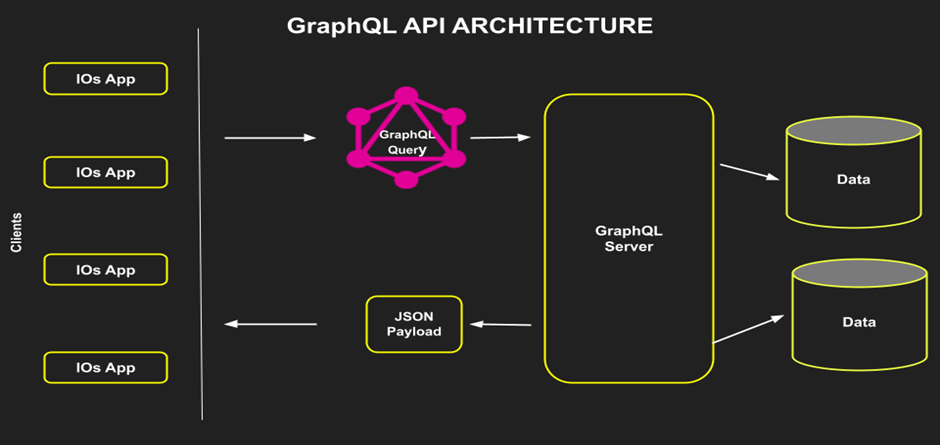
fig.04 API Architecture


Conclusion

The powerful and adaptable alternative to conventional REST APIs is GraphQL. It is a desirable option for modern API development since it enables clients to request precisely the data they require and has robust typing and real-time capabilities. The advantages it offers in terms of performance and versatility make it an appealing option for constructing the APIs that power today's online and mobile apps, even though there may be a learning curve and careful schema design required. GraphQL is positioned to play an increasingly critical role in influencing the future of API design as the web development ecosystem continues to change.


Abhishek Pandey


Diving Deep into React Native: The Bridge, Code Conversion, and Debugging

  The React Native Bridge: A Core Concept The React Native bridge is the linchpin that enables seamless communication between the JavaScri...